
Just days after the Summer Festival in Las Vegas ended, Elvis started his first tour since 1957. It was a short, five-city tour starting in Phoenix, Arizona, then St. Louis, Missouri, Detroit, Michigan, Miami, Florida, and finally Mobile, Alabama. All venues quickly sold out.
Rock tours had changed during Elvis’s time in Hollywood and now required much more organisation. So far, Elvis’s return to live performances had been residencies in Las Vegas and at the Houston Astrodome. Now, the company had to be on the move, crossing from the west coast across to the southeast. Gone were the days when instruments would be mounted on the roof racks of cars or in trailers, and the company would drive itself from one venue to the next. Now there was more equipment, a larger ensemble, larger venues, and heightened security to consider. It was a new challenge for Colonel Parker’s organisational skills. So, Colonel Parker brought in the services of promoters Jerry Weintraub and Tom Hullet. Before long, between Colonel Parker, the promoters and Elvis’s entourage, the organisation of every aspect would become a finely tuned machine.
Once the venues had been booked, transportation and accommodation were organised, arrangements would be made with the local police force, who would liaise with Elvis’s own entourage to ensure Elvis could travel from hotel to airport, to venue, then back to the hotel or straight to the airport with as little disruption as possible. Fans, however, would always seem to know where Elvis would be and would wait at the airport, hotel, or venue to catch a glimpse of him. Elvis would be very patient with the fans; he would, for example, go over to the perimeter fences of the airport and spend a few minutes chatting with them, signing autographs and posing for pictures, or maybe pause long enough for fans to capture a picture outside a hotel or venue. When Elvis visited a city, it was the equivalent of a Presidential visit.
The company had to be prepared for the unexpected, however. On the first night in Phoenix, someone made a crank call suggesting a bomb would go off in the Phoenix Veterans Memorial Coliseum. In an essay published in “Strictly Elvis” magazine, soon-to-be thirteen-year-old fan Debbie Lynn Gobins wrote: “There were big lines of Elvis fans at each of the many entrances. We waited, and finally, at 7:30, the doors normally would open … but they did not. When 8:30 came, I started to wonder if Elvis was O.K. I thought that I might not even get to see the King. But finally, the doors opened at 8:30. I later found out that someone had made a prank call stating that there was a bomb set to go off in the Coliseum at 8:30, when the show was to start.”
The sound system at the Phoenix Coliseum was inadequate for the 13,000-capacity crowd. Just as in 1957, sometimes Elvis could not be heard above the noise, and other times the backing singers could be heard above Elvis. On more than one occasion, Elvis opted to restart a song. The sound engineers did their best. But Elvis was none too happy with the sound. For the rest of the tour, Jerry Weintraub and Tom Hullet quickly arranged to have a state-of-the-art sound system purchased that could be used at every other venue. Hullet would comment that it was probably the first time Elvis could hear himself on stage.
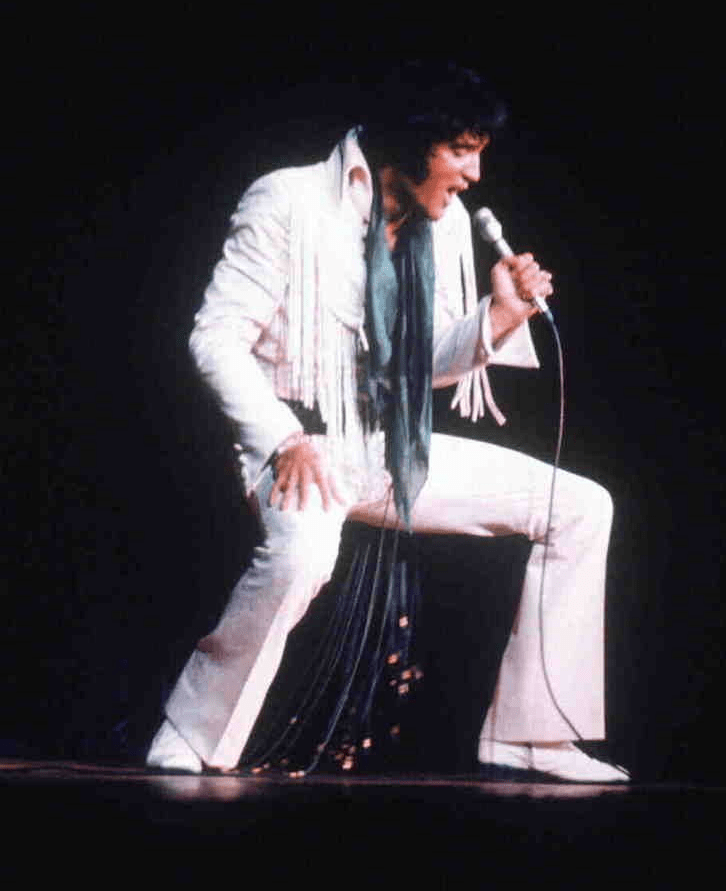
Phoenix, Arizona, September 9, 1970.
Elvis’s audience now featured fans of all ages, from the very young to the very old. As he had done in Las Vegas, Elvis mixed in the old songs with the new, so everyone was happy. The tradition of Elvis wearing scarves and distributing them to members of the audience started in Phoenix. The “Tuscan Citizen” reported on the reaction of the lucky recipient: “She screamed well enough to be a member of the Class of 1955, but she wasn’t old enough.”
The tour was a triumph despite the glitches at the first venue in Phoenix, with Elvis thought to be earning at least $100,000 per show. Touring quickly proved far more lucrative than the Las Vegas residency, given the size of audiences some of the larger venues could accommodate, which would rarely be below 10,000. Elvis was said to be euphoric about the success and the audience’s response; he loved being back out on stage. Colonel Parker was more than happy too, as he could see the money come rolling in.
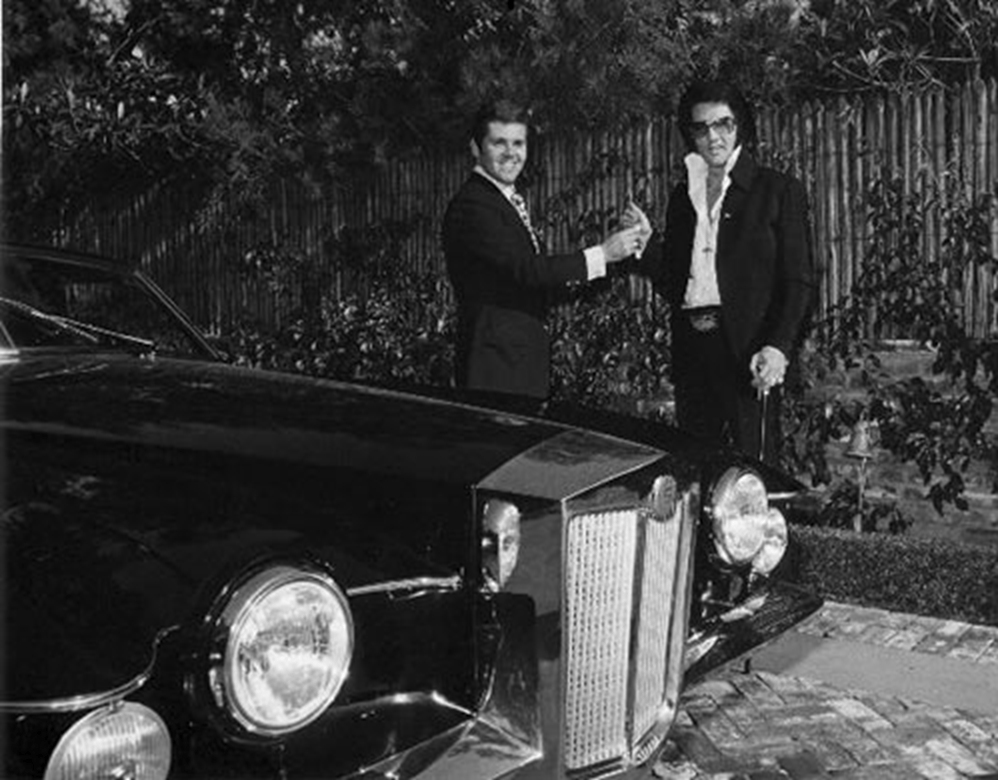
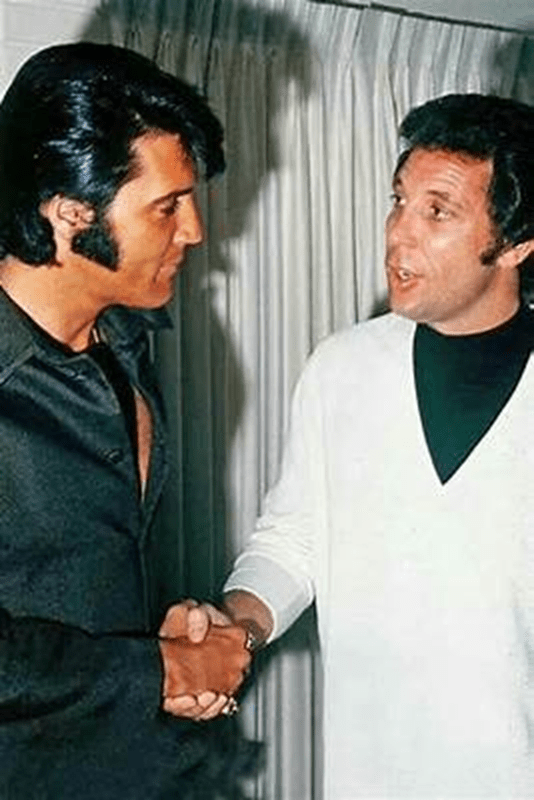
Elvis flew back to Memphis before going on to Nashville to complete some recordings. He then spent some more time in Memphis, including attending a Gospel Music Convention, then he went out west to stay at his Hillcrest Road home in Beverley Hills, where he treats himself to a new Stutz Blackhawk, and also went out to Las Vegas to see Tom Jones, with whom he had established a close friendship, since the mid 1960’s.
In November, a second eight-day, nine-show tour took place, visiting:
- Oakland, California, November 10, 1970, performing for 14,000.
- Portland, Oregon, November 11, 1970, performing for 11,800.
- Seattle, Washington, November 12, 1970, performing for 15,000.
- San Francisco, California, November 13, 1970, performing for 14,300.
- Los Angeles, California, November 14, 1970, 2 shows performing for 18,700 each.
- San Diego, California, November 15, 1970, performing for 14,650.
- Oklahoma City, Oklahoma, November 16, 1970, performing for 11,000.
- Denver, Colorado, November 17, 1970, performing for 12,000.
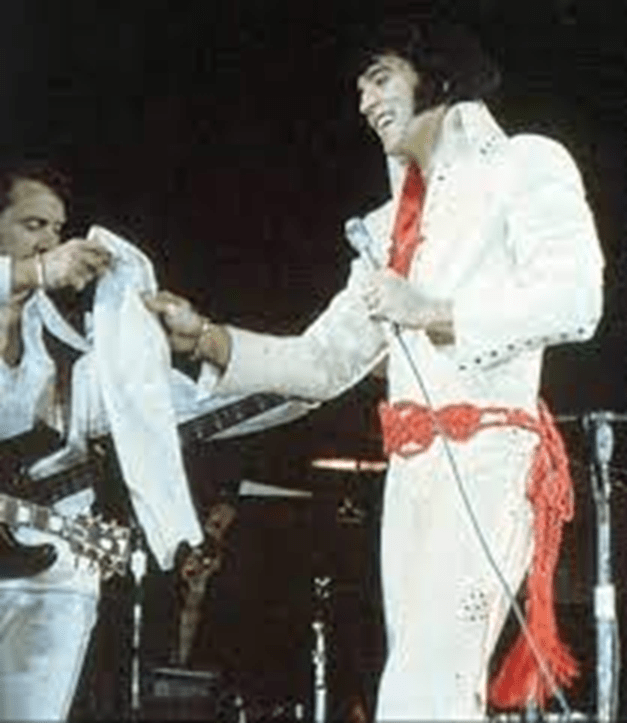
Elvis included the gospel song “How Great Thou Art” in his setlists for the first time during this tour. It was a gruelling but rewarding schedule. The tours would get a little longer and become more frequent as the decade progressed. Colonel Parker was chasing the revenue just like he had with the movies in the 1960’s, but ultimately this would result in devastating consequences.
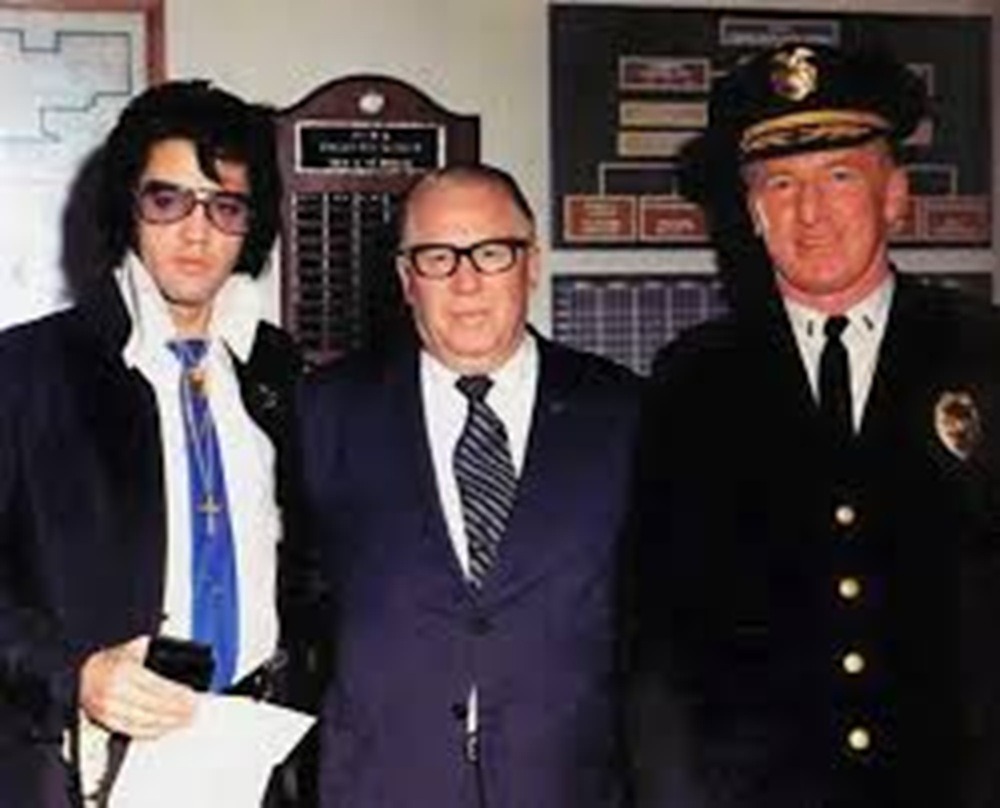
Police Chief George L. Seaton gives him a police badge.
See also
The Stutz Blackhawk was known to be one of his favourite cars. His later 1974 model was the last car he drove in the early hours of the day he died.
