America had gone through some turbulent times. In the sixties, there were several high-profile assassinations, including that of President John F. Kennedy, civil rights leader Dr Martin Luther King, and Senator Robert Kennedy. Elvis himself had experienced death threats. The most serious of which was during the August residency at the International Hotel, after the cameras for the movie “That’s The Way It Is” had left. Then there had been the bomb hoax in Phoenix. America had become ever more deeply involved in the Vietnam War, supporting the South, whilst the USSR supported the North. Peace-loving hippies would mount anti-war protests, and musicians such as Bob Dylan created songs with anti-war sentiments.
Elvis would, however, avoid being drawn into political conversations when dealing with the press and would skilfully dodge such questions during press conferences. He was at times concerned for his own safety and also that of his daughter Lisa Marie, who would be considered an ideal kidnap target. So, Elvis often carried a gun and was well protected by his entourage, which consisted of up to a dozen members, including cousins and friends from Memphis or from his army years. When on tour, his entourage was supported by local police officers. Elvis was appreciative of the support from various police forces around the country and would take the time to thank them. Elvis then began collecting police badges as mementoes of his various travels. It was not as if he could collect ordinary souvenirs on his visits to various cities across America. If he was lucky, he might catch a glimpse of a city sight whilst riding in a limousine between the airport, hotel, and venue.
Around this time, President Nixon was orchestrating a campaign against illegal street drugs and would, in 1971, declare such drugs as being “public enemy number one”.
After an argument with his father over his latest Christmas spending spree, which included the purchase of 10 Mercedes, Elvis left Graceland and boarded a plane bound for Washington, D.C., unaccompanied. During the flight to Washington, Elvis wrote a letter to President Nixon, supporting his campaign, suggesting he would like a Federal DEA badge for his collection, and in return, he would use his influence to warn the youth of the day about the dangers of street drugs.
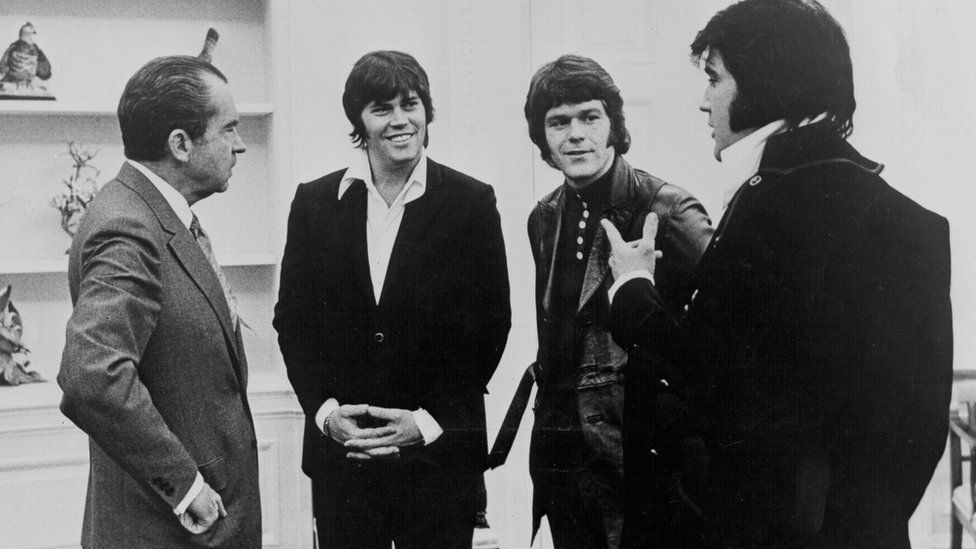
On arrival, Elvis calls for Jerry Schilling and Sonny West to come and meet him. The letter that Elvis wrote gets passed to a member of the White House Staff, Egil “Bud” Krogh, who sets up the meeting between Elvis and Nixon in the Oval Office.
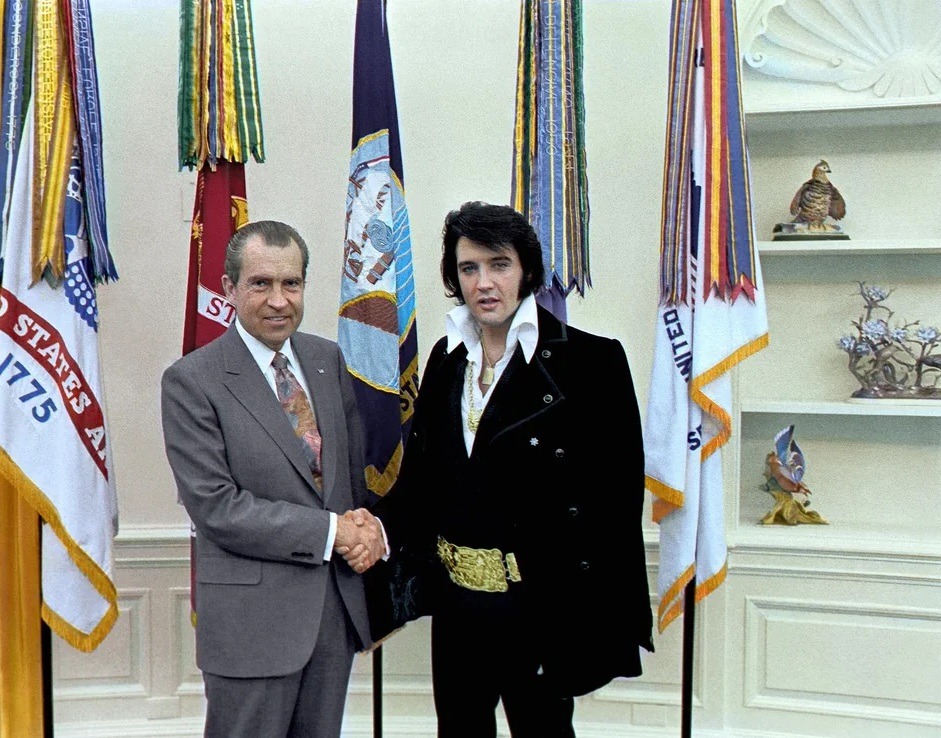
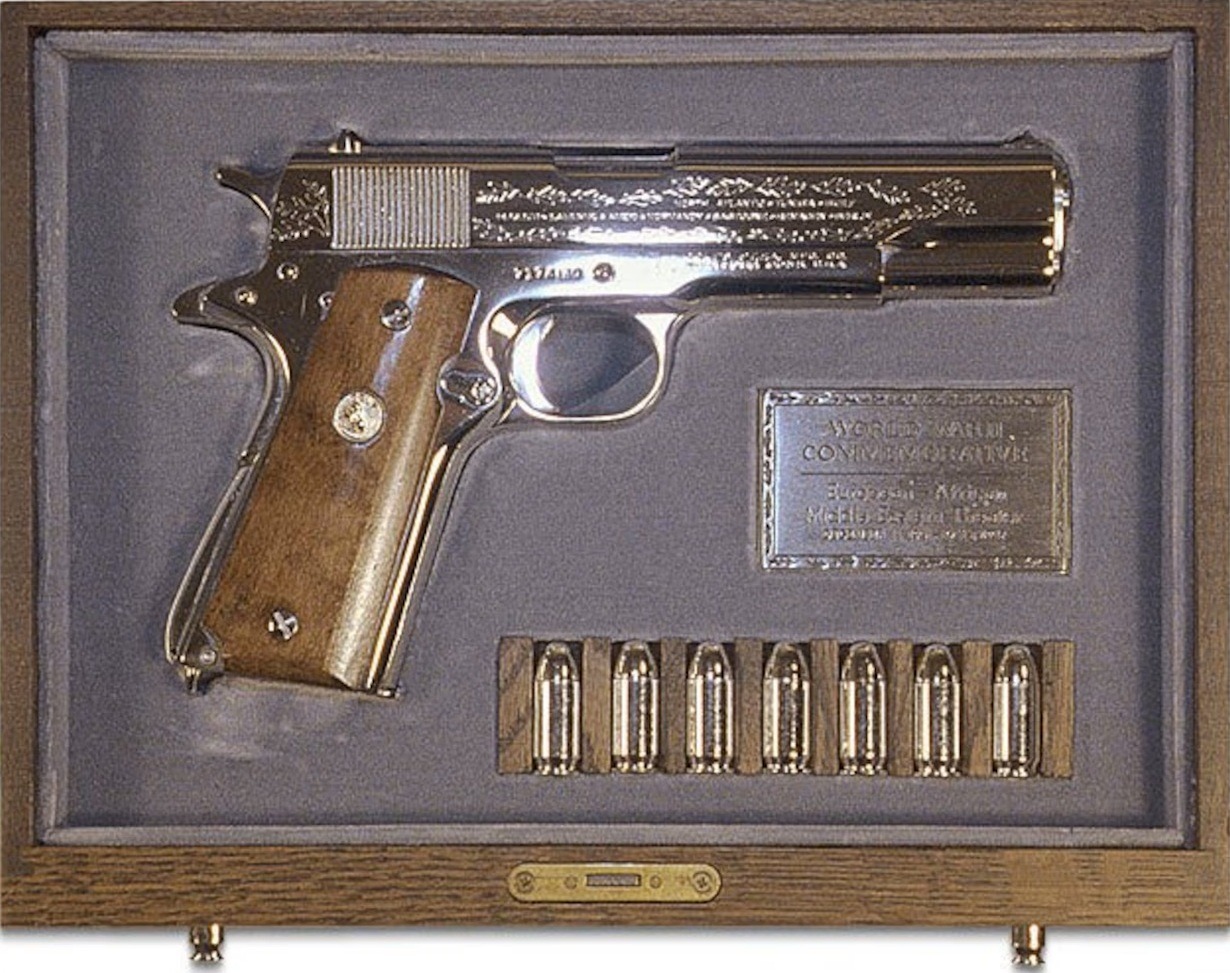
When Elvis and Nixon meet, Elvis presents Nixon with a World War II commemorative gun in return for the Federal DEA badge.
Elvis asks the President if his guys, who had been waiting outside the Oval Office, could join them, as they would like to meet the President. Nixon agrees, and Jerry Schilling and Sonny West both get to join the meeting. Nixon presented the pair of them with presidential cufflinks. After they thank the President, Elvis says, “You know they got wives too, sir.” Jerry Schilling would later recall, “That’s when I knew no one could say no to Elvis. He had the President running round the White House.”