
Elvis was back in Las Vegas in August through to the beginning of September. It was during this engagement that Colonel Parker devised his most ambitious project yet, a live TV special to be transmitted around the world via satellite. It would be a major entertainment first for Elvis to perform a global concert. Elvis was expressing interest in touring abroad, visiting places such as Japan and the UK. However, unknown to him at the time, Colonel Parker was a Dutch illegal immigrant who had no US passport. So, for Parker, touring abroad with Elvis would be very problematic.
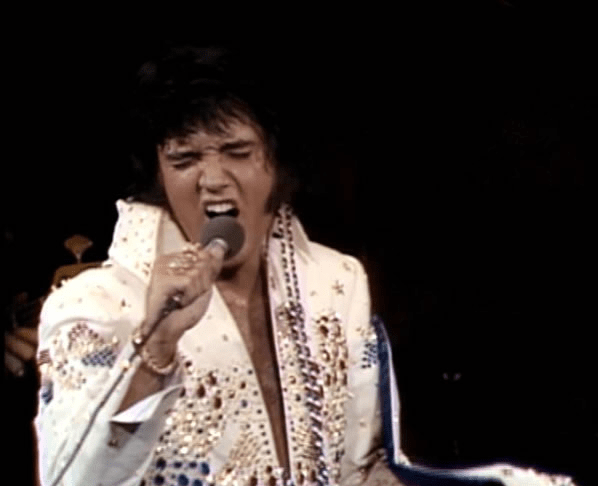
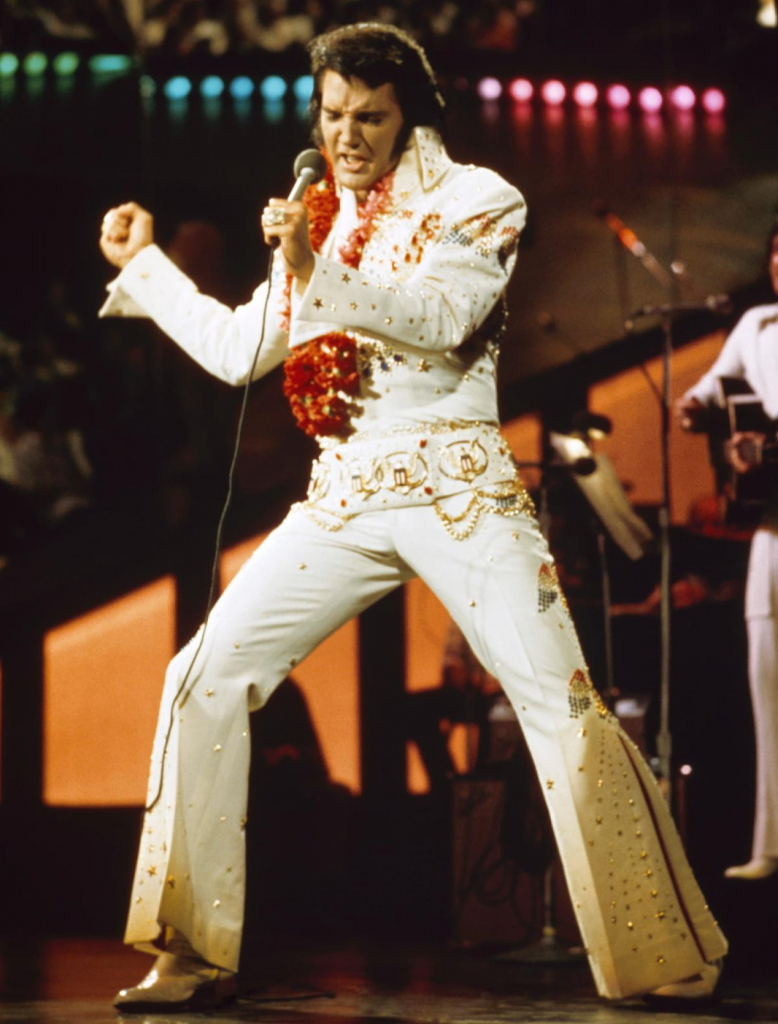
Originally, the concert was scheduled for the end of the November 1972 tour. However, MGM scheduled “Elvis On Tour” for general release at that time, so it was decided to move the concert to January 1973, before Elvis’s next Las Vegas residency. For the show, Elvis wanted an outfit that signified America. Bill Belew, the designer of Elvis’s stage attire since the 1968 TV special, produced the iconic “American Eagle” suit. Two jumpsuits were made with three capes and three belts. Each was jewel-studded in the pattern of an American Eagle. The original cape was never used because it was calf-length and proved way too cumbersome. The jumpsuits are said to have cost $65,000 each, the hip-length capes $8,000 each, and the belts $2,650 each. When put together, the outfit is said to weigh more than 70 pounds (32 Kg). One belt was given to Hawaii 50 actor Jack Lord, so Bill Belew had to make another in a hurry. One of the jumpsuits is said to be slightly larger than the other. This is the one used in the rehearsal concert on January 12, and the one Elvis would sometimes wear through 1974.
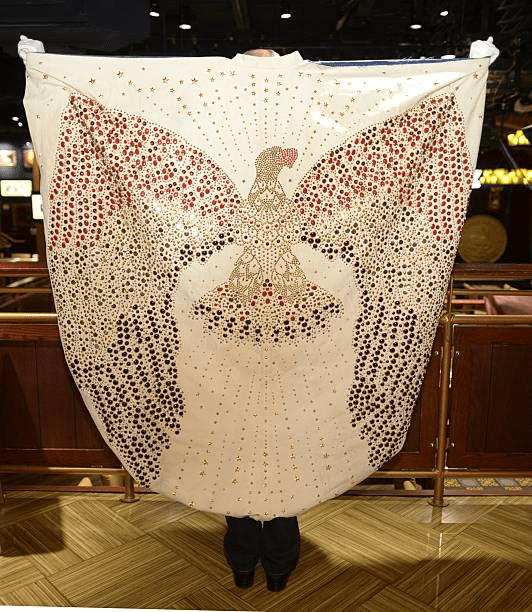
In interviews ahead of the show, Elvis was very much aware of the magnitude of the undertaking. Whilst live satellite broadcasts had been done before, it had been to cover things like a Presidential speech. And whilst they would become fairly routine as the twenty-first century drew closer, this was a first for an entertainment programme, especially one focused entirely on a single person. Elvis said, “It’s so very hard to comprehend it.”
In the lead-up to the show, Elvis exercised more frequently and was more careful about what he ate, and he is said to have eliminated his reliance on prescription medication. As a result, when Elvis took to the stage, he was at his best.
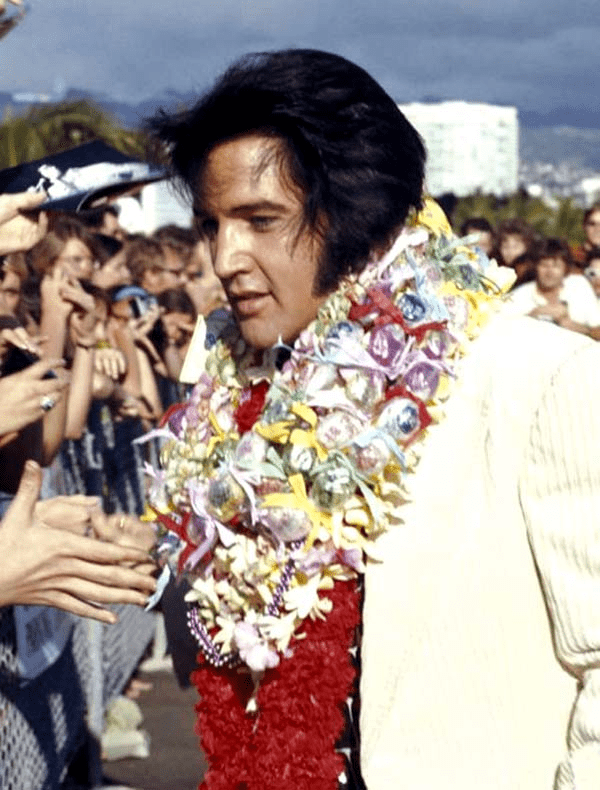
Such was the importance of the show that the decision was made to film the rehearsal concert on January 12, 1973, as a backup in case anything went wrong with the technology. As usual, he commanded the audience with a relaxed performance, including songs that he had not used before. A couple of things came out of the rehearsal concert, first it was identified that there was time for three more songs, so for the actual broadcast, “Johnny B. Goode”, “I Can’t Stop Loving You” and a medley of “Long Tall Sally” and “Whole Lotta Shakin’ Goin’ On” were added. Also, on watching the rehearsal playback, Elvis decided to trim his hair a little for the main event.
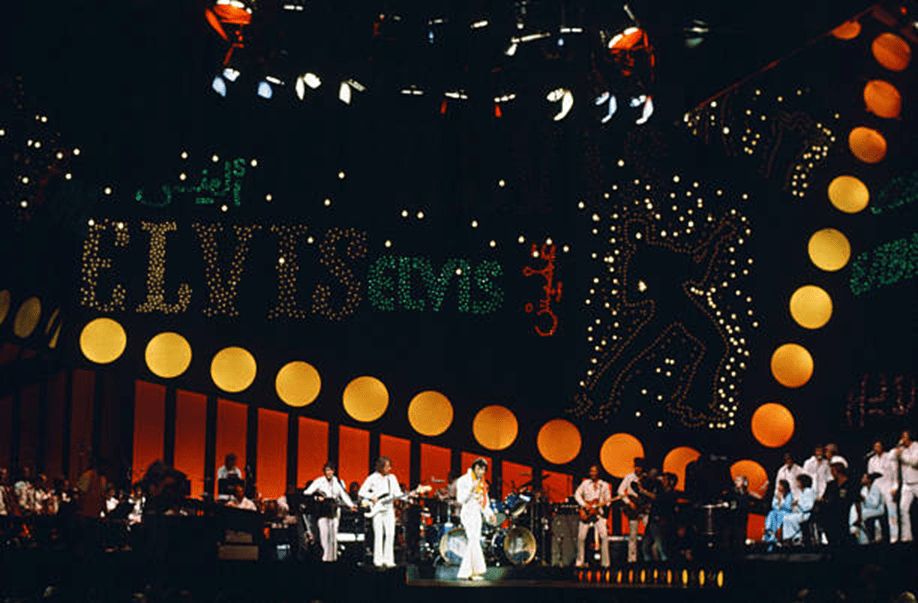
In addition to the expensive costume, the producer, Marty Pasetta, devised a stage featuring neon lights that showed Elvis’s silhouette, which could be turned on and off during the rock numbers, and his name was flashed in multiple languages, reflecting the show’s global nature. The stage also had a central ramp that extended into the audience, where Elvis would hand out scarves.
The setlist was a little more dominated by dramatic ballads than usual, some of them new. This was deliberate, given that a live album of the concert was also being recorded and needed to offer something a little different from the “Madison Square Garden” album, which had recently done very well. Some think, looking back with the benefit of hindsight, that some of the songs may well have been reflective of Elvis’s inner feelings, as Elvis had filed for divorce from Priscilla in August 1972. Jack Lord, who attended the show and whom Elvis mentioned as being “one of my favourite actors”, told Elvis later that he had never heard such dramatic music before.
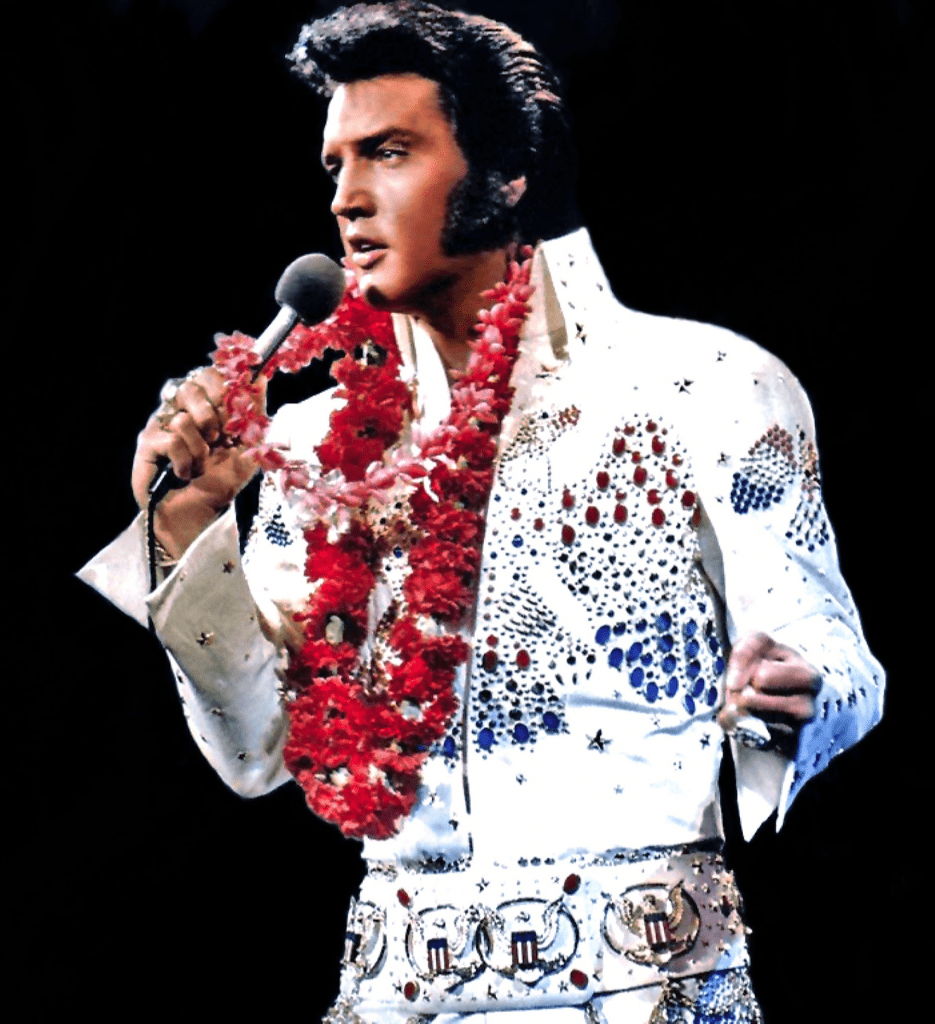
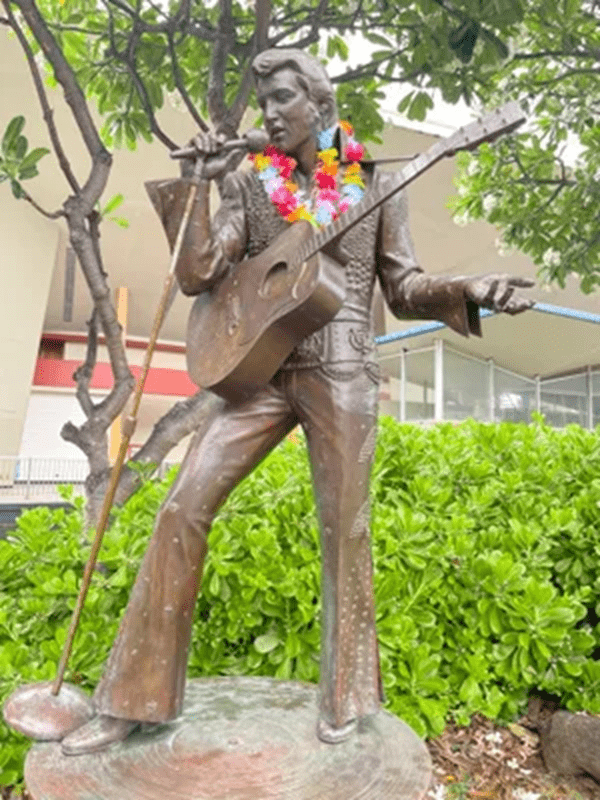
There was no set price for the tickets at the 6,000-seat Honolulu Convention Centre. Instead, fans were asked to pay whatever they could afford on the night. The concert receipts were donated to the Kuiokalani Lee Cancer Foundation. Lee, who had recently died from cancer, had written the song “I’ll Remember You”, which Elvis had recorded in 1966 and sang on the show. The target for donations was $25,000. However, $75,000 was achieved. This further cemented Elvis’ popularity in Hawaii, and today a statue depicting Elvis during the show stands outside the arena.
The songs performed that night were:
- Opening: Then From 2001: A Space Odyssey
- See See Rider
- Burning Love
- Something
- You Gave Me A Mountain
- Steamroller Blues
- My Way
- Love Me
- Johnny B. Goode
- It’s Over
- Blue Suede Shoes
- I’m So Lonesome I Could Cry
- I Can’t Stop Loving You
- Hound Dog
- What Now My Love
- Fever
- Welcome To My World
- Suspicious Minds
- I’ll Remember You
- Medley: Long Tall Sally / Whole Lotta Shakin’ Goin’ On
- An American Trilogy
- A Big Hunk O’ Love
- Can’t Help Falling In Love
At the end of “An American Trilogy”, Elvis was caught up in the moment and unbuckled his belt and tossed it into the audience. Then, as he ended with “Can’t Help Falling In Love”, he reached behind his neck to detach the cape that he had put on when introducing the song from “Blue Hawaii”, and it too was flung out into the audience.
The live show was watched by 37.8% of TV viewers in Japan, 91.8% in the Philippines, 70% in Hong Kong, and 75% in Korea. The show went out to Australia, Thailand, South Vietnam, and other countries, including 30 European countries, where it was time delayed. It was claimed that 1.5 billion people had watched the show, the largest TV audience in history for a solo performer. It was watched by more people than those who witnessed the moon landing in 1969.
In America, the show was broadcast on April 4, 1973, with extra songs inserted, mainly from the movie “Blue Hawaii,” and attracted 51% of the TV viewing audience.
The album would also top the US Billboard 200 album charts.
It was a momentous success and is still enjoyed today, via hugely successful DVD and Blu-ray presentations and is still frequently aired on television. What people did not know at the time was that, although there would still be more success to come, this would be the last the world would see of Elvis at his very best.
See also
- Elvis: Aloha Press Conference, September 4, 1972
- Elvis interview: November 20, 1972 – Honolulu, Hawaii
- Arrival of Elvis in Hawaii 1973 ( Aloha From Hawaii )
- Full rehearsal concert, January 12, 1973
- Elvis: Aloha From Hawaii, via Satellite, January 14, 1973
- This is a fantastic figurine of ELVIS PRESLEY-EAGLE JUMPSUIT. He is part of Mattel’s Timeless Treasures Collection. It is featuring Elvis in the White Eagle Jumpsuit.
- Elvis trivia buffs will know immediately what the white eagle jumpsuit represents. For those who don’t, it’s what he wore during the “Aloha in Hawaii” concert, which is considered to be the most memorable performance of his career
