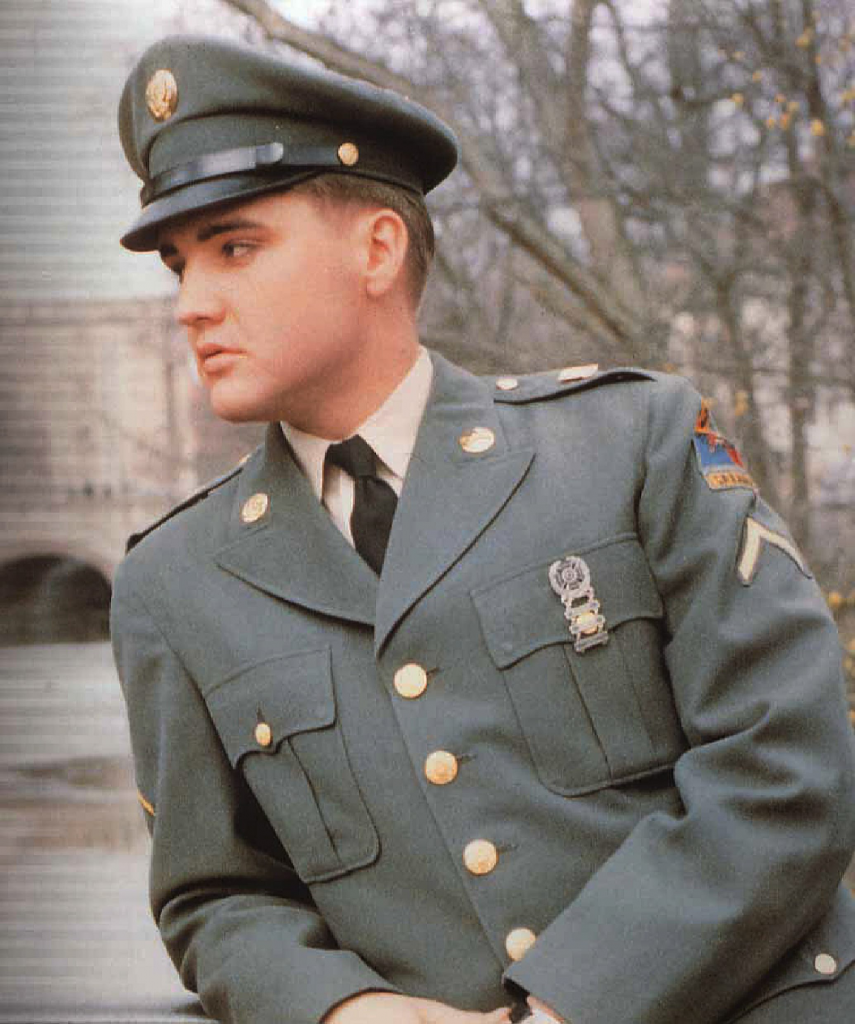
In the USA, military service was mandatory for individuals drafted by the Selective Service System. This meant that if the services had vacancies and were short of voluntary recruits, they could draft others.
Elvis Presley received his draft notice on December 20, 1957, with an order to report for duty on January 20, 1958. At the time, Elvis was committed to making his fourth movie, “King Creole”, so authorities agreed to defer his induction until March 24, 1958.
There have been all sorts of theories put forward by commentators about why Elvis was drafted. Given the controversy surrounding his performances, observers had speculated whether it was a tool the authorities used to curtail the Elvis phenomenon. Others have suggested that his manager, Colonel Parker, may have influenced them based on the theory that, because things were becoming unmanageable from a public appearance standpoint, the break would give things a chance to calm down.
At the time, members of the press who had managed to interview Elvis in recent months were surprised by the person behind the rock ‘n’ roll bomb. They discovered a charming, polite, humorous, naturally quite shy individual, a huge contrast to his stage persona.
Whatever the truth behind the speculation, on reflection, it does seem highly convenient in the circumstances, but there will never be any proof that anything more was involved than just the normal process of the Selective Service System.
Elvis accepted his call to service with good grace, even though he was genuinely concerned about his future career. The prospect of a rock ‘n’ roll star having a two-year hiatus was unheard of at that time. It was not like modern times when top artists can go years between releasing new albums or touring. It was going to be another step into uncharted territory for Elvis.
The Colonel advised Elvis not to accept any form of special treatment. This meant no assignments to “Special Services”, where he could have spent his service entertaining troops. When Elvis was inducted into the Army, he was inducted as a regular soldier, despite the Navy, the Army and even the Pentagon offering special roles. The only concession he ever received was the deferment to complete “King Creole”. This was granted only by authorities when Elvis personally wrote to the draft board, explaining that Paramount Studios had already spent $350,000 on pre-production for “King Creole” and that many jobs depended on his ability to complete the movie.
On March 24, 1958, a day described by the press observers as being “black Monday for the fans”, Elvis was given a medical examination, declared A1 fit for duty, and sworn in as a private, with the service number 53310761. Elvis was assigned to lead a group of fellow inductees who were transferred to Fort Chaffey, Arkansas, by bus. Four days later, after completing formalities, Elvis travelled by train to Fort Hood (now known as Fort Cavazos) in Texas, for six months of basic training.
Elvis was assigned to Company A, 2nd Medium Tank Battalion, 37th Armor. Publicly, Elvis expressed his enjoyment of the training, becoming a pistol sharpshooter, and of the physicality of the rough-and-tumble of tank training. Privately to friends, he expressed homesickness and had an acute fear that his career was in ruins.
Colonel Parker assured Elvis that he had enough merchandising and material to keep Elvis’ name in the public eye for the two-year duration, despite Elvis himself being off limits. Whatever criticism could be directed towards Parker for how he would conduct aspects of Elvis’ later career, he did keep to this promise. During a period of leave in June, Elvis did manage to record additional material for RCA. He was also allowed to live off base with his mother, father, and grandmother, which helped him.
However, events took a turn for the worse in August. Elvis’s mother, Gladys, had had a tough time adjusting to Elvis’s fame and fortune, along with all the commitments that came with it. She had begun drinking heavily, taking diet pills to try to control her weight, and was affected by a poor Southern fried food diet. This affected her liver function, and after collapsing from exhaustion, Elvis arranged for her to return to Memphis on August 8, 1958. The next day after arriving in Memphis, Gladys was rushed to the hospital. After a call from his mother’s doctor Elvis arranged for emergency leave. This was initially turned down by an officer who was subsequently disciplined for his action. Emergency leave was then granted by another officer on August 12, so Elvis did not need to carry out the threat he had made after the initial decline to go absent without leave.
Two days later, on August 14, 1958, Gladys Love Presley, wife of Vernon Elvis Presley and mother of Elvis Aaron Presley, died from a heart attack triggered by cirrhosis. Both Vernon and Elvis were devastated. Those close to him often suggest that Elvis never recovered from the loss of his mother, and they consider the loss to be among the triggers for periods of depression Elvis would experience later in life. Gladys was the person he would turn to when the criticism he received troubled him. Gladys was initially buried at Forest Hill Cemetery on August 15, 1958, with Elvis reported to have collapsed from grief before, during and after the service. The Army extended Elvis’ emergency leave until August 18. When he left Graceland to return to Fort Hood, Elvis left instructions that his mother’s room was to remain untouched.
Elvis completed his training on September 19, 1958, and was transferred to Brooklyn Army Terminal in New York, before departing on the USS General George M. Randall, bound for West Germany on September 22, 1958. Elvis was re-assigned to 1st Medium Tank Battalion, 32nd Armor, 3rd Armoured Division, at Ray Barracks in what was known at the time as West Germany, where he served as an armour intelligence specialist.
Elvis arrived in West Germany on October 1, 1958, to a huge reception from German fans. He once again declined an offer to join Special Services. Not only would this action earn him the respect and admiration of fellow soldiers, but it also helped transform the opinion of those who had bitterly criticised him prior to his military service. This change is the second of four life-changing events that occurred during this period.
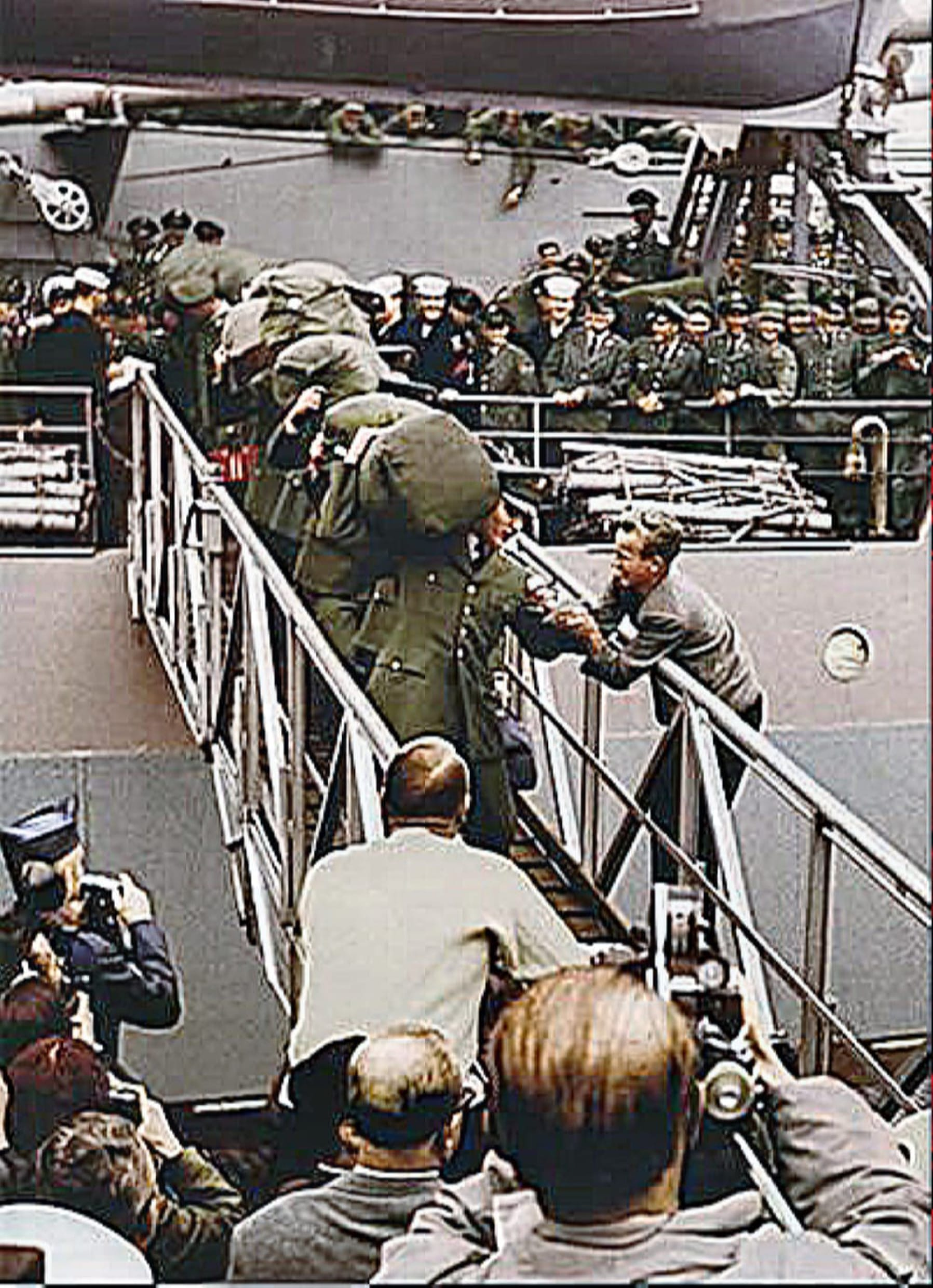
Elvis’s life as a regular soldier consisted of tank manoeuvres, guard duty, and assisting senior officers, typical of the post-war times for any recruit assigned to Germany. It is thought that during such manoeuvres, particularly on freezing winter nights, an army sergeant introduced Elvis to amphetamines to help maintain energy and strength. Unfortunately, these proved to be addictive and as the years went on, they became a contributing factor to Elvis’ ill health and his tragic death. On a more positive note, he was also introduced to karate and would become highly skilled in the martial art, often using it in movie fight scenes, and as part of his on-stage movements later in his career. Being ever-generous, Elvis would donate his army pay cheque to charity, buy TV sets for the barracks and spare uniforms for each member of his outfit.
Elvis was allowed to live off base, initially in hotels in towns near Ray Barracks, before settling at No. 14 Goethe Strasse, Bad Nauheim, with his father and grandmother. Duty permitting, Elvis would sign autographs for fans congregating outside between 7:30 pm and 8:00 pm each evening.
On September 13, 1959, Elvis met Priscilla, his future wife. Priscilla was just fourteen when she met a fellow soldier who asked her if she would like to meet Elvis. The meeting happened during a small party at the house. Elvis introduced himself to Priscilla as if she would not know who he was, saying, “Hi, I’m Elvis Presley.” Being the adopted daughter of a US Air Force officer, Priscilla was mature beyond her years and proved to be a good listener. The two became friends, and Elvis would trust her with his anxieties about his career, the death of his mother and potential plans for his future return to the States. At first, Priscilla’s parents were sceptical about the friendship, but once they met Elvis in person, they were suitably impressed, particularly by his good manners.
Elvis became Sergeant Elvis Presley on January 20, 1960. The Army held a press conference for Sergeant Presley on March 1, 1960, before he returned to the USA. He was asked about his decision to be a regular soldier. Elvis responded, “I was in a funny position. Actually, that’s the only way it could be. People were expecting me to mess up, to goof up in one way or another. They thought I couldn’t take it and so forth, and I was determined to go to any limits to prove otherwise, not only to the people who were wondering, but to myself.”
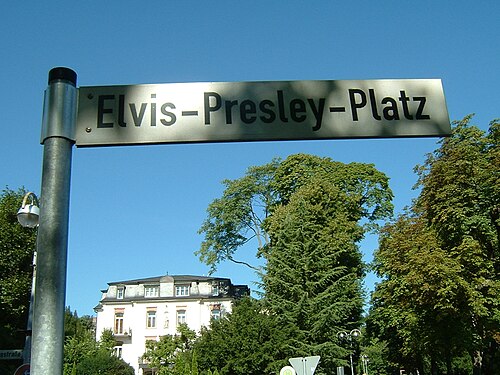
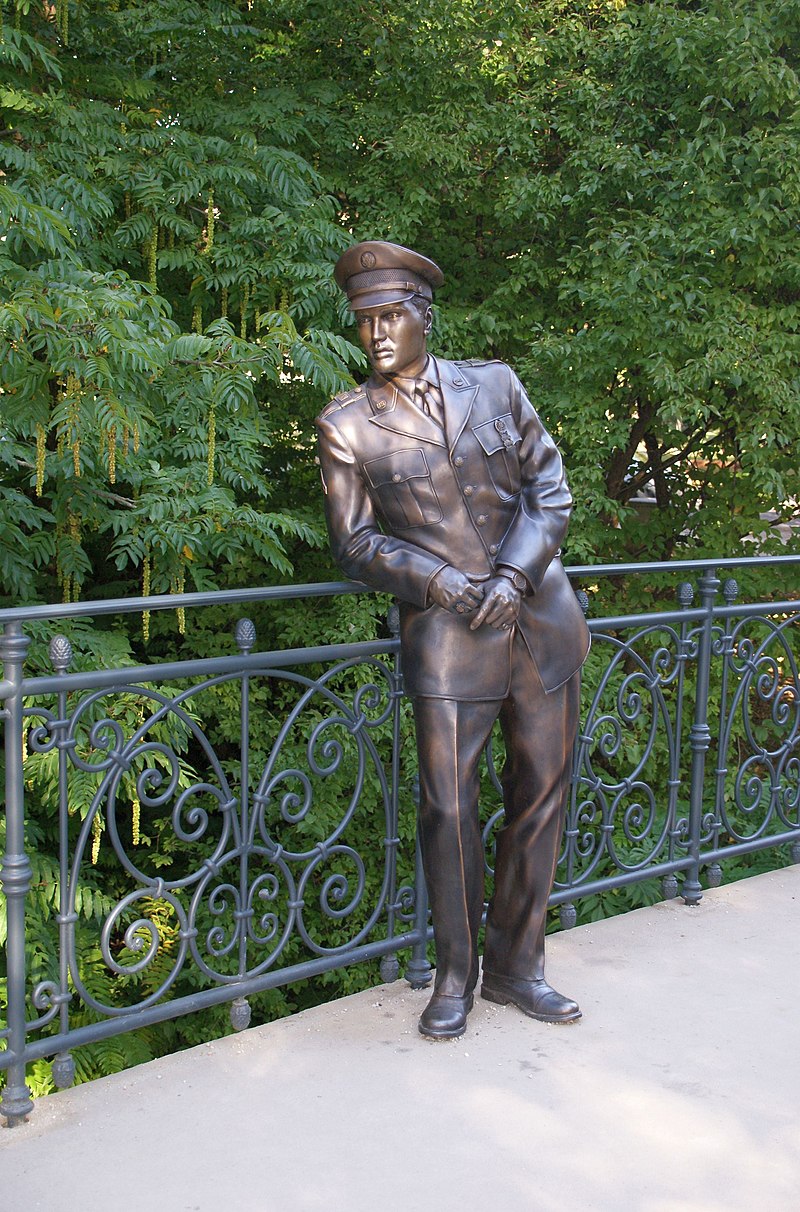
Elvis received praise for his period in the army, particularly for his attitude. In Bad Nauheim, Elvis has a square named after him, and a statue of him stands on one of the bridges.
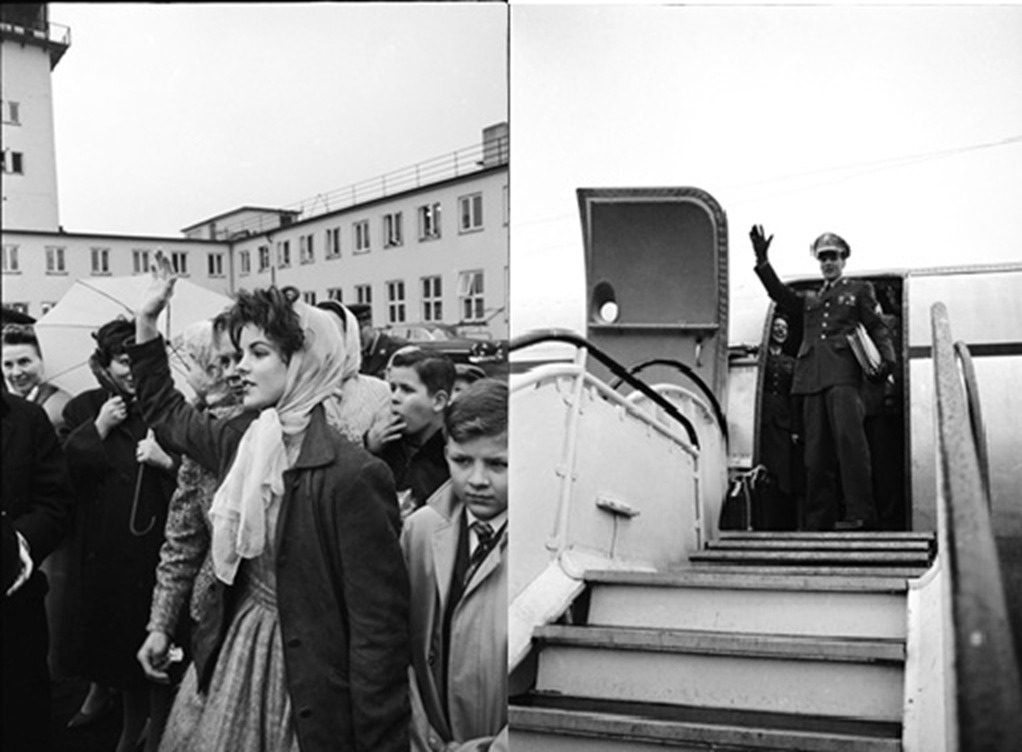
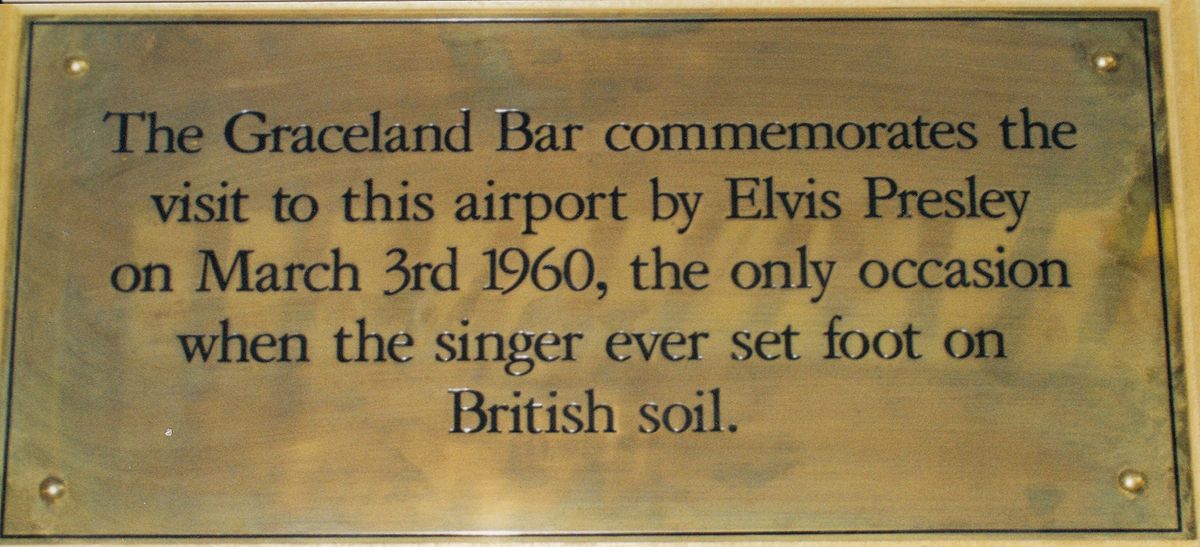
On March 2, 1960, Priscilla and her mother accompanied Elvis to the Rhine-Main Air Base, where Elvis departed West Germany. The plane made a short stop at Prestwick Airport in Scotland, in the early hours of the next day. He disembarked the plane, and it was the only time Elvis set foot on British soil. There is a dedicated bar and plaque at the airport commemorating the event.
The plane then flew to McGuire Air Base in New Jersey. Nancy Sinatra, the daughter of Frank, RCA Executives, Colonel Parker, and thousands of fans welcomed him. Colonel Parker had already announced that Elvis’s first TV appearance on his return home was to be hosted by Frank Sinatra, titled “Welcome Home Elvis”. Elvis was honourably discharged from the army on March 5, 1960. The two years had not been easy for Elvis, but he had done himself proud, and he earned the respect of Americans for it, whatever their attitude towards rock ‘n’ roll.